Radial vs. Focused Shockwave Therapy: Which is Right for Your Foot Pain?
Regenerative podiatry has transformed how we treat persistent lower extremity conditions, offering rapid pain relief and accelerated tissue healing without the need for surgery or heavy medications. However, not all shockwave treatments are the same.
At Advanced Foot Care of NJ, we recommend one of two distinct types of regenerative therapy depending on your specific injury: Radial Shockwave (ESWT) or Focused Magneto Therapy (EMTT). While both utilize high-energy waves to stimulate your body’s natural healing processes, they deliver energy differently and target entirely different types of conditions. Keep reading for a comprehensive look at how they compare and which option might be the key to your recovery.
Radial Shockwave Therapy (ESWT): Broad Coverage for Soft Tissue
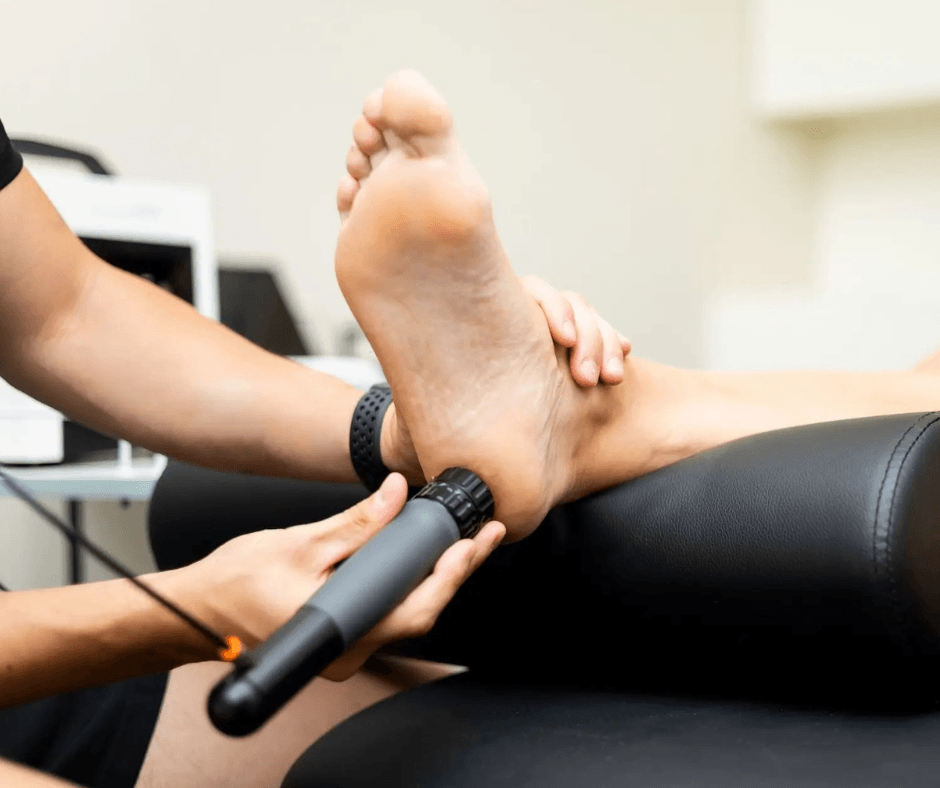
How It Works: Extracorporeal Shock Wave Therapy (ESWT) generates acoustic waves that reach their maximum energy at the surface of the skin and then disperse—or fan out—as they travel deeper into the tissue. Because the energy spreads over a larger area, it is exceptionally effective at treating widespread pain, reducing muscle tension, and stimulating blood flow across a broader region of muscle or fascia.
Best For: Because of its fanning delivery, ESWT is the gold standard for superficial, widespread, or chronic conditions. If your foot pain keeps coming back, radial shockwave is typically used for:
- Plantar Fasciitis: Breaking up localized scar tissue and stimulating healing across the broad band of fascial tissue on the bottom of the foot.
- Sports Injuries: Helping athletes step past runner’s remorse by addressing superficial micro-tears and stiffness.
- Chronic Soft Tissue Injuries: Relieving tight, aching muscles and long-standing soft tissue pain that has not responded to traditional conservative treatments.
Focused Magneto Therapy (EMTT): Deep Precision for Complex Injuries
How It Works: Unlike the fanning effect of radial waves, Extracorporeal Magnetotransduction Therapy (EMTT)consolidates its energy into a highly targeted, concentrated beam. This allows the high-energy magnetic waves to safely bypass the surface skin and deliver maximum therapeutic energy deep within the body at a very specific focal point. It provides a deeper level of penetration without dispersing energy, making it a drug-free, needle-free, and pain-freesolution ideal for treating deeper tissues or highly localized, acute pain.
Best For: Because of its pinpoint accuracy and deep penetration capabilities, focused EMTT is utilized for a different set of podiatric challenges, including:
- Tendonitis: Providing deep, targeted relief so you can finally stop icing your Achilles and actually heal chronic inflammation and micro-tears.
- Bone Pain: Stimulating osteoblast production and bone regeneration for stress fractures or delayed-healing fractures.
- Arthritis: Targeting deep joint inflammation to improve mobility and generate a profound analgesic (pain-relieving) effect.
- Acute Sprains: Speeding up the cellular repair process immediately following a severe ankle or ligament sprain.
- Neuromas: Precisely targeting thickened, irritated nerve tissue (such as a Morton’s Neuroma) to relieve localized burning and shooting pain.
Compare and Contrast: Making the Right Choice
While your podiatrist will make the final clinical recommendation based on a physical examination and diagnostic imaging, understanding the core differences can help you prepare for your treatment plan:
- Depth of Penetration: Radial ESWT treats superficial to mid-level tissues, while focused EMTT can penetrate deep into joints, nerves, and bones.
- Size of the Treatment Area: Radial therapy covers a wide, broad area of tissue. Focused therapy targets a highly precise, pinpoint location.
- Condition Timeline: Radial is generally preferred for widespread soft tissue wear-and-tear. Focused is typically reserved for acute, deep-tissue, hard-tissue conditions, or stubborn tendonitis.
Both radial and focused treatments are highly effective, non-invasive, and typically require zero downtime. Patients often begin to experience significant pain relief and improved mobility after just three to five treatment sessions.
Struggling with persistent foot or ankle pain? Call us. We will find the right fix for you.
At Advanced Foot Care of NJ, LLC, our doctor and staff proudly serve the communities of Little Falls, Cedar Grove, Verona, Stoney Road, Sandy Hill, Albion Place, and Great Notch. Contact us today to schedule an appointment!