
Why Your Foot Burns After a Long Drive
(And What You Can Do To Take Care Of It!)
You’re two hours into a long holiday road trip. The traffic is moving, the music is good, but you’re distracted by a nagging sensation in your right foot. It starts as a dull ache, but soon it turns into a burning, tingling, or numb feeling that makes you want to pull over and shake your leg out.
“Driver’s Foot” is a common complaint, but for many people, that burning sensation isn’t just stiffness; rather, it’s a warning sign of a deeper issue with your nerves or circulation. In this post, Advanced Foot Care of NJ explains why your foot burns behind the wheel, plus a few simple strategies you can use to prevent the problem.
The Mechanic of the Problem: The “Gas Pedal” Trap
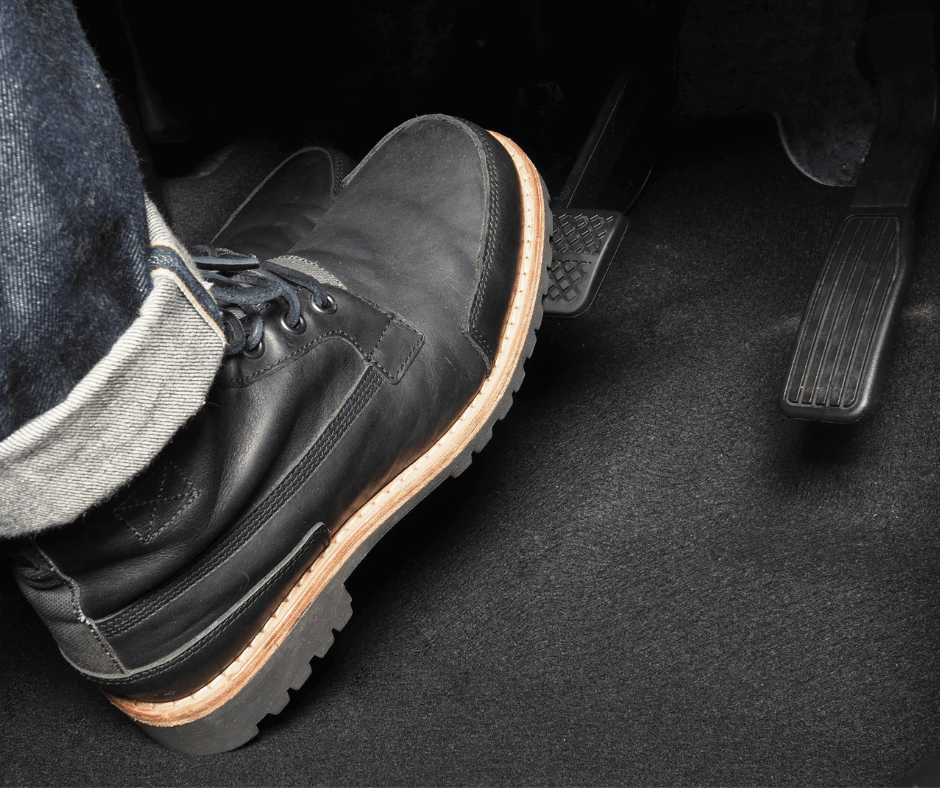
Driving creates a unique and unnatural stress on your right foot.
- Fixed Position: You hold your foot in a semi-flexed position (dorsiflexion) for hours, hovering over the pedal.
- Micro-Vibrations: The constant vibration from the car engine travels up through the pedal into your foot, which can irritate sensitive nerves.
- Compression: The edge of the car seat can press into the back of your thigh or knee, cutting off blood flow and compressing the sciatic nerve.
For a healthy foot, this causes stiffness. But if you have an underlying condition, this specific posture acts like a “stress test” that triggers your symptoms.
The 3 Main Culprits Behind the Burn
If your foot is burning, tingling, or going numb, it is likely one of these three conditions flaring up:
- Peripheral Neuropathy: This is the most common cause of “burning” feet. If you have early-stage nerve damage (often from diabetes), your nerves are already hypersensitive. The vibration and fixed position of driving can send them into overdrive, causing that hot, prickly sensation.
- Tarsal Tunnel Syndrome: Think of this as Carpal Tunnel for your ankle. Holding your foot at an angle on the gas pedal can compress the tibial nerve as it passes through the inner ankle. This compression shoots burning pain into the bottom of your foot and toes.
- Sciatica (The Seat Problem): Sometimes, the problem isn’t in your foot at all. If your car seat is positioned poorly, it puts pressure on the sciatic nerve in your lower back or leg. This sends “referred pain” (numbness and tingling) all the way down to your foot.
Your Road Trip Survival Guide
You don’t have to cancel your trip, but you do need to change how you drive.
- The “90-Degree” Rule: Adjust your seat so your knees are slightly higher than your hips. This takes the pressure off the back of your thighs and reduces sciatic compression.
- Use Cruise Control: Whenever it is safe, use cruise control. Removing your foot from the constant tension of the gas pedal is the single best way to stop the nerve irritation.
- The 2-Hour Stop: Get out of the car every two hours. Walk around for 5 minutes. This restores circulation and “resets” the nerves in your ankle and foot.
- Check Your Wallet: Do not drive with a wallet in your back pocket. This creates a direct pressure point on your sciatic nerve.
When to See a Podiatrist
If the burning stops the moment you get out of the car, it may just be mechanics.
However, if you notice that the burning persists at night, if you have numbness that doesn’t go away, or if you notice swelling in just one leg, these are medical red flags.
Don’t let “Driver’s Foot” ruin your holiday travel. If you are struggling with burning or numbness, schedule an evaluation. We can assess your nerve function and circulation to ensure you’re safe on and off the road.
At Advanced Foot Care of NJ, LLC, our doctor and staff proudly serve the communities of Little Falls, Cedar Grove, Verona, Stoney Road, Sandy Hill, Albion Place, and Great Notch. Contact us today to schedule an appointment!
