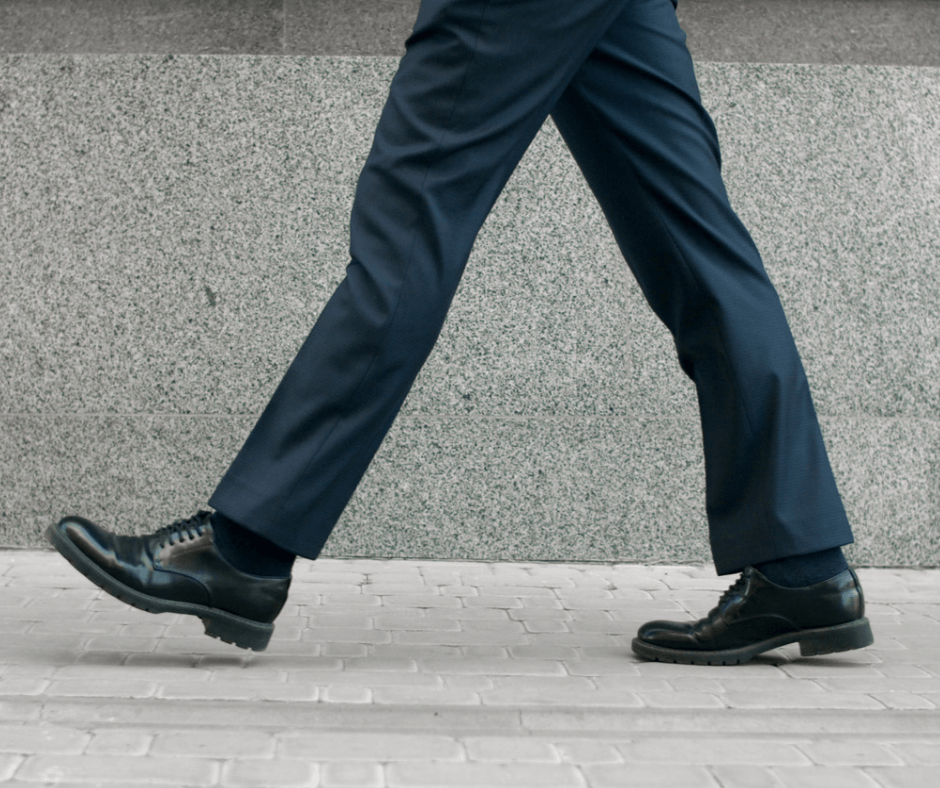
Are Your Shoes Secretly Sabotaging Your Feet? What Your Footwear Reveals About Your Gait
We ask a lot of our feet. They carry us through long workdays, intense workouts, and weekend errands. Yet, when foot pain strikes, most people immediately blame their age or their activity level, completely overlooking the most common culprit: their footwear.
At Advanced Foot Care of NJ, we treat patients every day whose chronic heel, arch, and ankle pain could be resolved simply by changing what they put on their feet. If you are dealing with unexplained aches and pains, the following blog covers how daily footwear choices impact your kinetic chain…and what your favorite shoes are trying to tell you!
Are Your Shoes Hurting You?
It sounds like a simple question, but the answer is often complex. Many patients are walking around in shoes that are actively working against their anatomy.
- A shoe that is too narrow squeezes the metatarsal bones together, pinching delicate nerves and accelerating the development of painful bunions and neuromas.
- On the other hand, a shoe that’s too old or worn out loses its shock-absorbing EVA foam.
- When this foam degrades, your foot is forced to absorb the full impact of walking on hard pavement, leading to micro-tears in your ligaments and conditions like Plantar Fasciitis.
If your feet throb the moment you take your shoes off at the end of the day, your footwear is likely the problem.
Flat Shoes or High Heels? The Daily Dilemma
When it comes to women’s footwear, patients often ask us to settle the debate: which is worse, perfectly flat shoes or high heels?
- Both extremes create biomechanical problems. High heels force your body weight entirely onto the ball of your foot while unnaturally tightening your Achilles tendon.
- However, transitioning directly into perfectly flat, unsupportive ballet flats or flip-flops can be just as dangerous.
- Completely flat shoes offer zero arch support, causing your foot to flatten out and overpronate with every step.
The ideal everyday shoe falls somewhere in the middle: a wide toe box, a rigid heel counter, and a slight heel drop to support the arch without straining the Achilles.
What Your Shoes Reveal About How You Walk
You don’t always need a high-tech treadmill analysis to see if your kinetic chain is out of alignment. You can do a self-assessment right at home just by looking at the bottom of your oldest, most-worn pair of sneakers.
Your shoes reveal how you walk. If you place your sneakers on a table at eye level, look closely at the rubber tread:
- Heavy wear on the inside edge: This indicates severe overpronation (your ankles are rolling inward and your arches are collapsing).
- Heavy wear on the outside edge: This indicates supination (your arches are rigid, and your weight is being forced onto the outer edge of your foot).
- Bald spots under the ball of the foot: This suggests you may have a tight Achilles tendon or are placing too much pressure on your forefoot.
Step Into Better Foot Health
Uneven shoe wear is a major red flag that you are walking with a biomechanical imbalance, one that could easily lead to stress fractures, tendonitis, or chronic knee pain if left untreated.
If you suspect your footwear is causing your pain, or if you noticed an uneven wear pattern on your sneakers, it is time to seek professional support. We also encourage you to check out our full educational video library for more insights!
At Advanced Foot Care of NJ, LLC, our doctor and staff proudly serve the communities of Little Falls, Cedar Grove, Verona, Stoney Road, Sandy Hill, Albion Place, and Great Notch. Contact us today to schedule an appointment!