The Hidden Link Between Hormones, Pregnancy, and Foot Pain
At Advanced Foot Care of NJ, we frequently treat female patients who are frustrated by a sudden, seemingly unexplained onset of foot pain. Often, they haven’t changed their shoes or their exercise routines. The hidden culprit? Hormones.
From pregnancy to menopause, drastic hormonal shifts can fundamentally alter the biomechanics of a woman’s foot. Keep reading to learn why these changes happen and how you can protect your mobility, too.
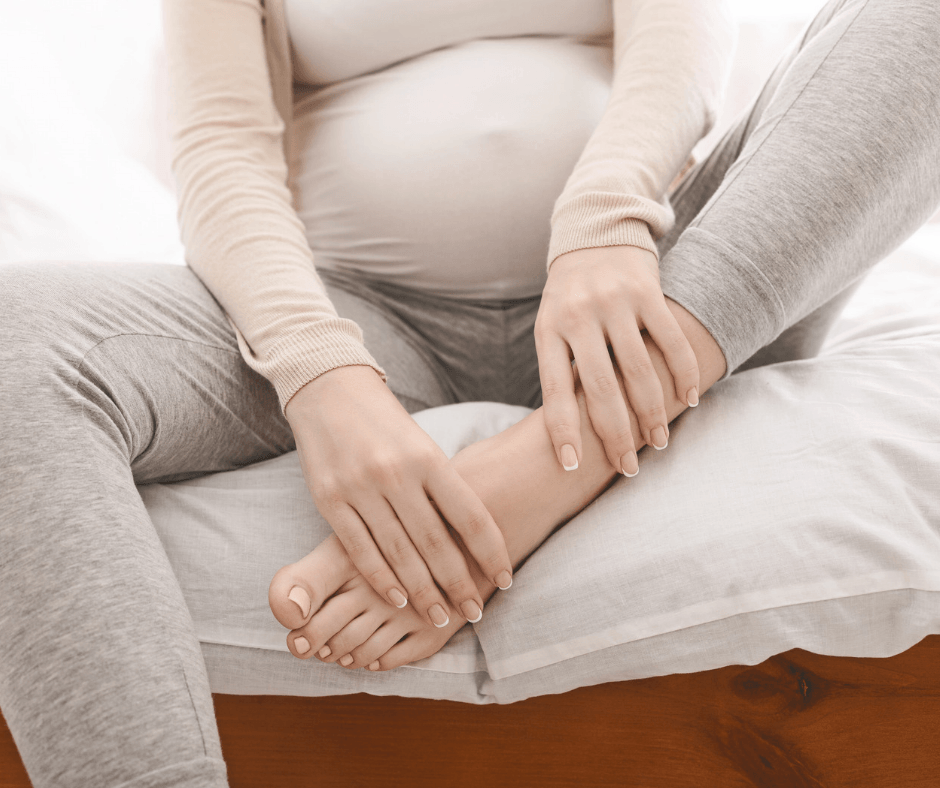
Pregnancy and the “Relaxin” Effect
It is a well-known fact that women often go up a half or full shoe size during pregnancy, but it isn’t just because of swelling.
- During pregnancy, a woman’s body releases a hormone appropriately called relaxin.
- The purpose of relaxin is to loosen the ligaments in the pelvis to prepare the body for childbirth.
However, relaxin doesn’t just target the pelvis; it travels through the entire body, including the feet. This, in turn, can lead to:
- Collapsed Arches: As the ligaments in the foot become loose and highly elastic, they struggle to support the additional weight of the pregnancy. The arch physically collapses, leading to a sudden onset of adult flat feet.
- Plantar Fasciitis: This severe flattening places immense, repetitive tension on the plantar fascia, causing the sharp morning heel pain that so many expectant mothers experience.
If your arches collapse during pregnancy, they rarely return to their original height after childbirth, which is why your new, larger shoe size is often permanent.
Menopause, Estrogen, and the Disappearing Fat Pad
Foot mechanics change again later in life. As women enter perimenopause and menopause, their bodies experience a significant drop in estrogen levels. Estrogen is a crucial component in maintaining the body’s natural collagen production and tissue elasticity.
When estrogen drops, two major foot problems typically arise:
- Thinning Fat Pads: Your heel and the ball of your foot are protected by thick, natural fat pads that act as shock absorbers.
- Decreased collagen causes these fat pads to thin out and atrophy.
- Without this built-in cushion, walking barefoot on hard floors suddenly feels like walking directly on bone.
- Osteoporosis Risk: Lower estrogen also decreases bone density, making post-menopausal women significantly more susceptible to painful stress fractures in the feet, even from simple, low-impact activities like walking.
The Bunion and Hammertoe Connection
Why do women suffer from bunions and hammertoes at a much higher rate than men?
- While narrow, restrictive fashion footwear (like high heels) certainly aggravates these conditions, genetics and inherited traits factor in, too.
- On top of that, the hormonal joint laxity women experience throughout their lives plays a significant underlying role!
- When ligaments are loose, the bones in the front of the foot are more easily pushed out of alignment, accelerating the development of painful bunions and rigid, curled toes.
How to Protect Your Kinetic Chain
You cannot stop hormonal shifts, but you can provide your body with the external support it needs to stay properly aligned.
- Whether you are an expectant mother dealing with new arch pain or a menopausal woman struggling with thinning fat pads, generic drugstore gel inserts will not solve the problem.
- You need a prescription custom orthotic designed for your changing foot structure to block your arch from collapsing and redistribute your body weight safely.
Do not let foot pain slow you down! In honor of Women’s Health Month, prioritize your foundation. Contact Dr. Anant Joshi at Advanced Foot Care of NJ in Woodland Park today to schedule a comprehensive structural evaluation!
At Advanced Foot Care of NJ, LLC, our doctor and staff proudly serve the communities of Little Falls, Cedar Grove, Verona, Stoney Road, Sandy Hill, Albion Place, and Great Notch. Contact us today to schedule an appointment!